Neural network based metal structure prediction after SLM
Not that interesting in practical sense but I did enjoy the process.
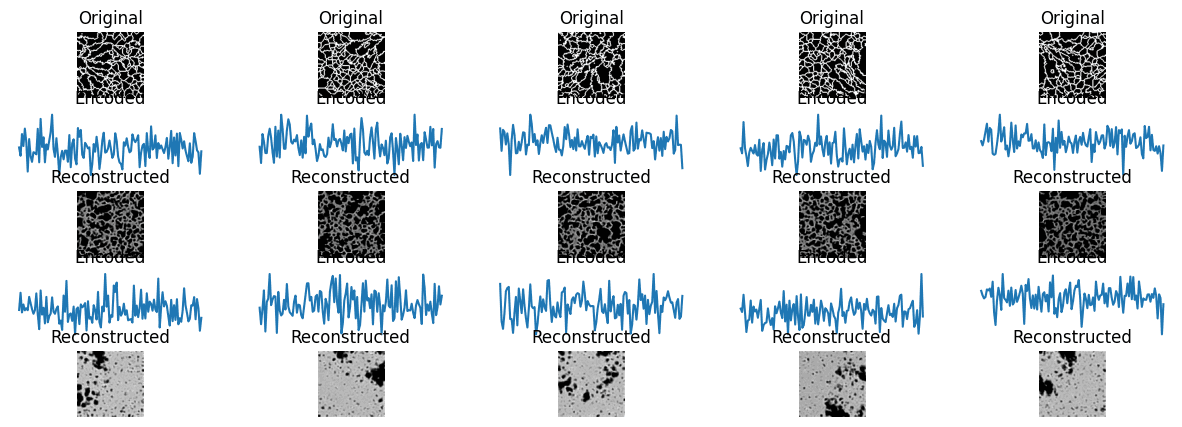
Decided to delve into physics-applied ML for my Bachelor's thesis.
The goal was to create a model that predicts structural properties (namely grain size distribution as f(x,y,z)) of a part produced using selective laser melting (SLM). Since traditional simulation methods could take days of computation on supercomputers even for relatively small regions, there is a need for a faster approach. ML-based solutions seemed promising. For my thesis I decided to narrow the scope and build a small POC.
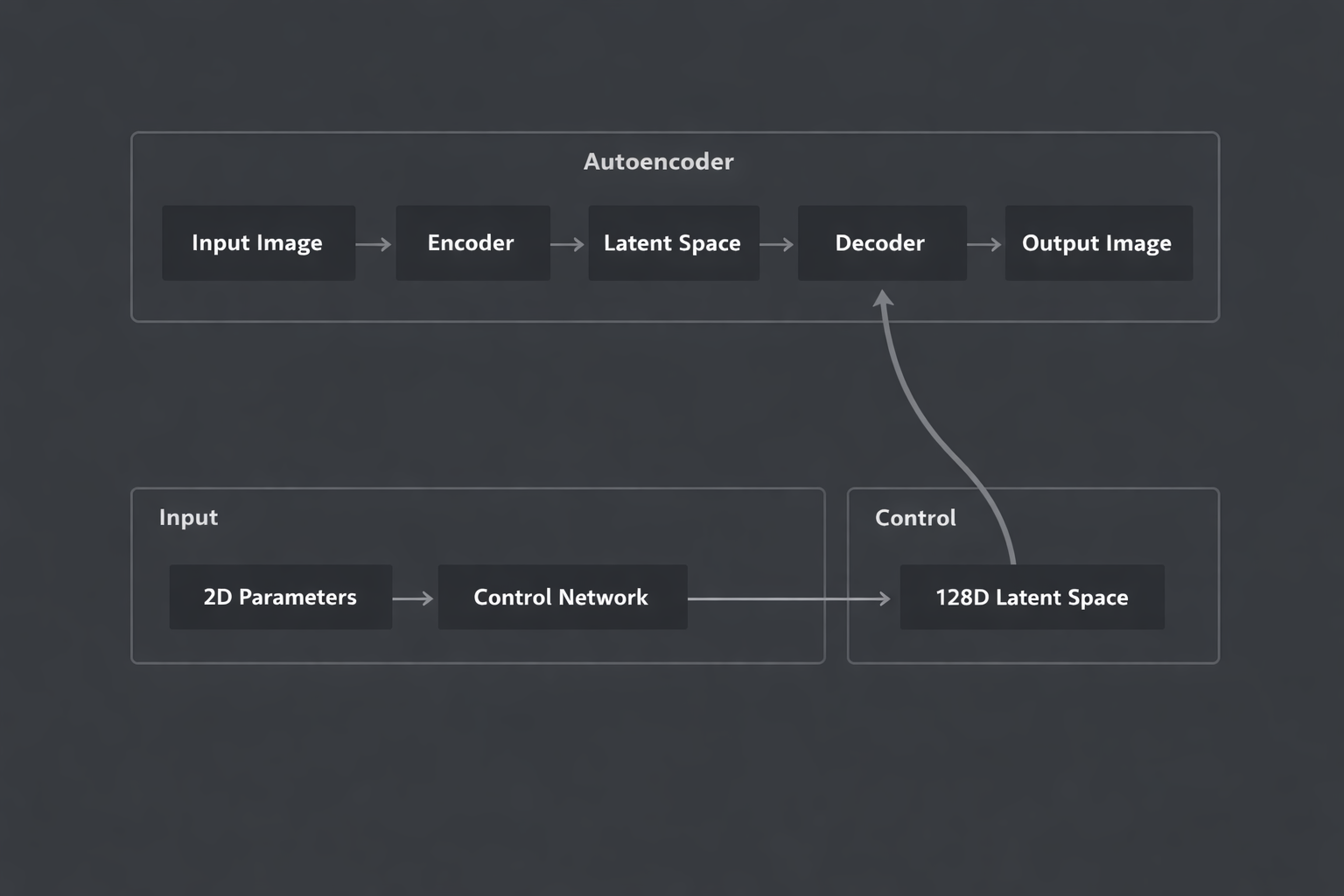
After trying different model architectures, pre- and postprocessing approaches, this is what I landed on:
- A VAE was used to transform microstructure images into latent space and back.
- A "control network" predicted latent space encodings based on the coordinates of the melting location.
- Mean was subtracted from those encodings in postprocessing (the control network produced encodings that were very close to each other, so removing the mean improved output quality).
The results captured the right trends: grains were larger in regions where traditional simulations also showed larger grains, while running up to 6 orders of magnitude faster than the cellular automata used for data generation (thanks to efficient convolution operations, GPU acceleration, and larger time steps of up to 50×).
Results visualisation is shown in the project preview image.